
- Since 2 August 2026, Article 50 of the EU AI Act requires a visible disclosure on real estate visuals that are substantially modified or generated by AI.
- Virtual staging, adding or removing elements, and replaced skies are directly covered. Fines can reach €15 million or 3% of global turnover.
- The responsibility falls on the agency that publishes the listing. Centralising your visuals with one trusted partner who documents their process is the simplest way to stay covered.
A buyer clicks on a listing, falls for a sunlit living room, books a viewing, and finds a room that's smaller, darker, more ordinary than the photo. EU law has just decided that gap needs to be disclosed, not hidden.
Since 2 August 2026, the transparency obligations under Article 50 of the AI Act have come into force across the European Union. In practice: any image that gives the impression of a real photograph, while having been substantially modified or generated by AI, must carry a visible, perceptible disclosure, from the first point of contact with the content.
A note buried in metadata, a keyword slipped into the listing description, or fine print at the bottom of the page isn't enough. The disclosure has to be visible directly on the image, with no technical tool required to find it.
This is no longer a question of ethics or best practice. It's a legal obligation, with fines that can reach €15 million or 3% of global turnover.
What's covered, and what probably isn't
The rule targets commercial visual content that gives the impression of a real photograph. For real estate, that primarily covers:
- Virtual staging, digitally furnishing or redecorating an empty or existing room.
- Adding or removing elements, taking out a car, a pole, clutter, adding furniture or landscaping that doesn't exist.
- Sky or background replacement using an AI generator.
- Fully generated visuals built from a floor plan or description, with no source photo at all.
By contrast, the standard edits a professional photographer makes, exposure correction, perspective straightening, colour grading, merging several real exposures via HDR, don't sit in the same category as generated or substantially altered content. The distinction comes down to a simple question: will the buyer, on the actual viewing, see what the photo showed them?
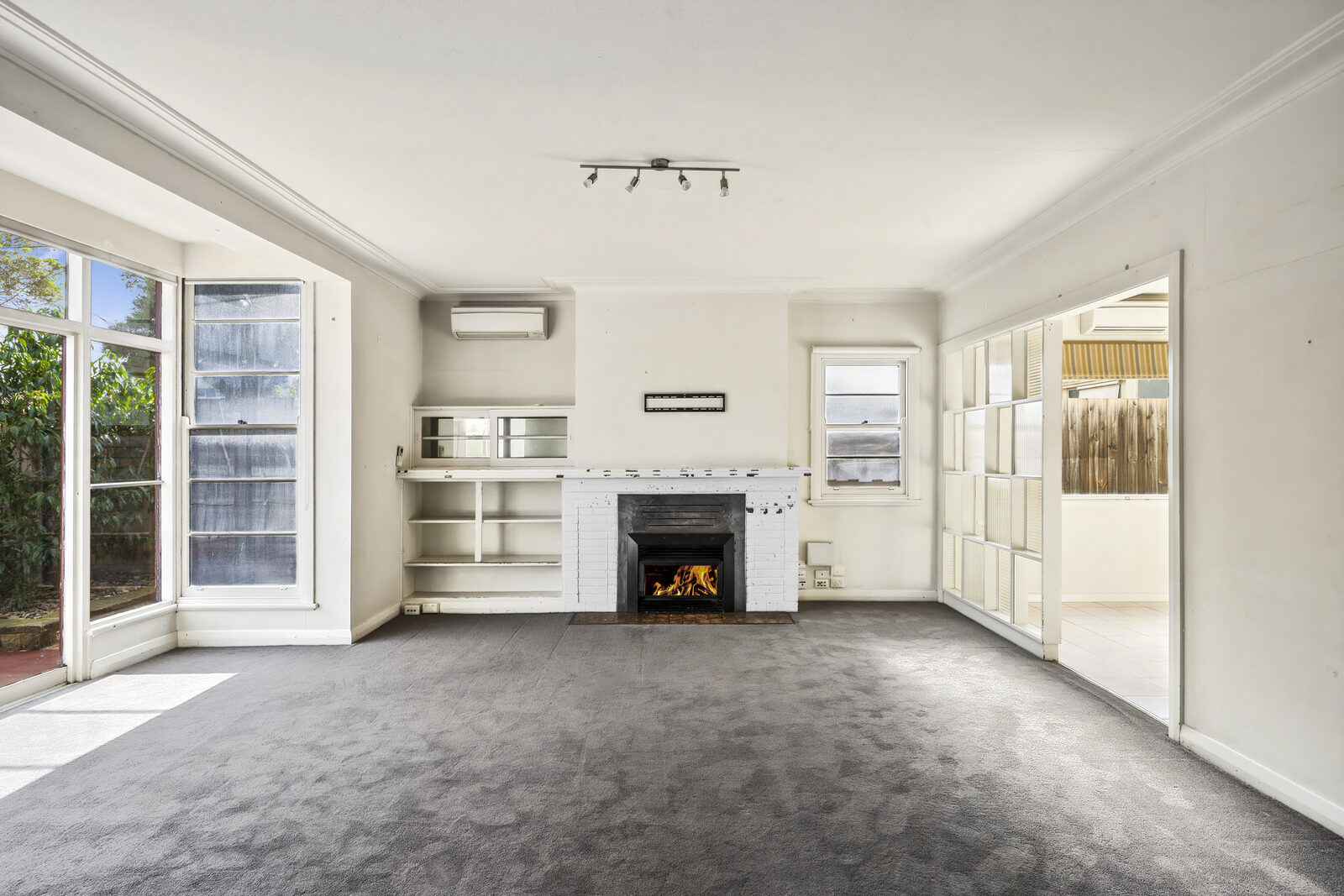
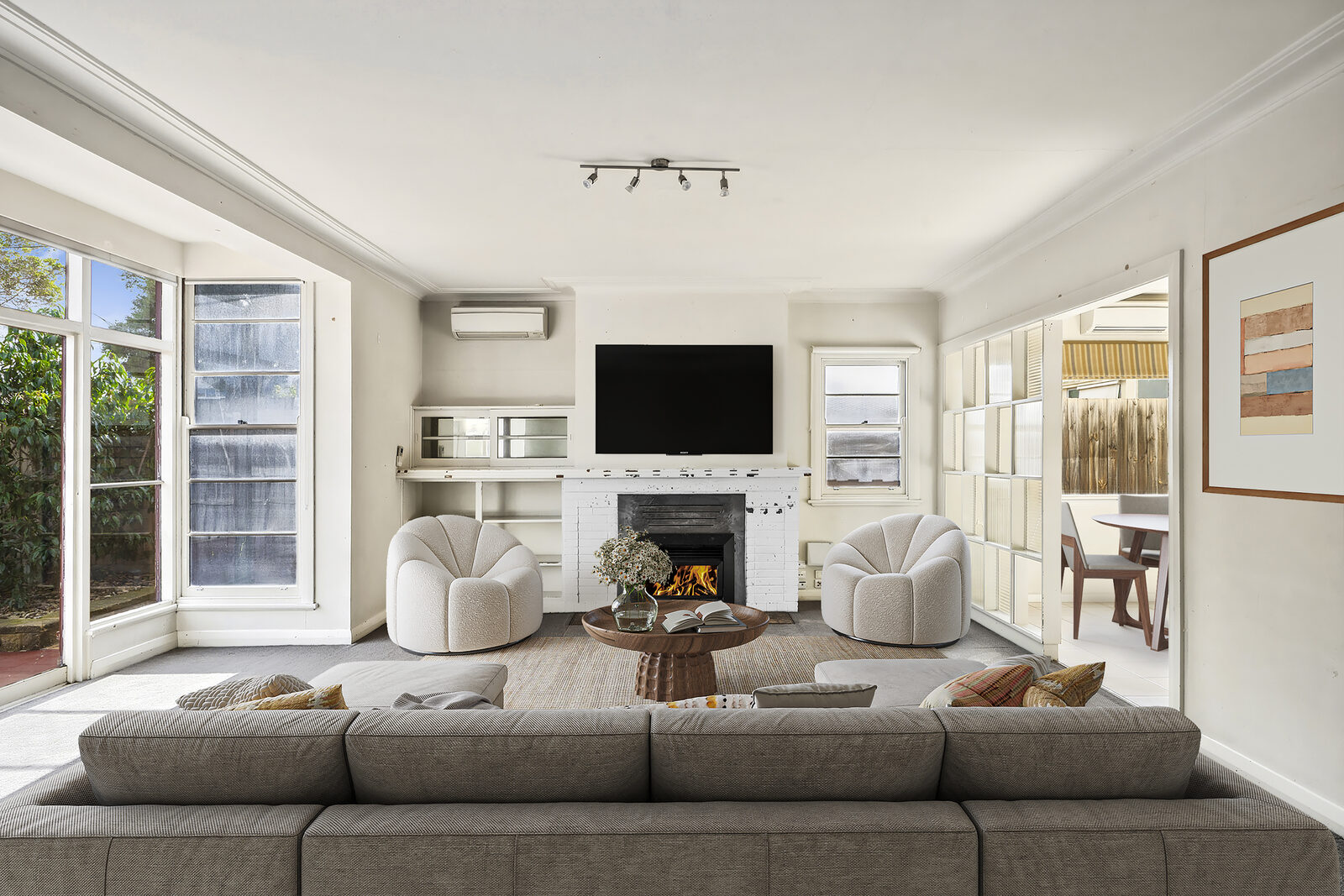 Virtual Staging
The grey area is real, and that's the point. Between a well-exposed photo and a room entirely redecorated by AI, there's a gradient of practices. That grey area is exactly what makes the choice of provider decisive: a professional who knows where to draw the line, and documents what they do, protects the agency that publishes the listing.
The real risk isn't AI. It's the patchwork of providers
Many agencies don't realise they're already exposed. A photo taken on an agent's phone, touched up with a virtual staging app downloaded ten minutes earlier, published across three different portals, with no one quite sure what was changed or how to document it. Add a one-off freelancer for one property's photos, an intern for another's, a generative AI app to fill a gap in a rush, and you end up with a visual history that's impossible to audit.
The responsibility for labelling falls on the deployer, meaning the agency that publishes the listing, not only the tool or freelancer who produced the image. If challenged, it's the agency that has to explain what was done, on which photo, by whom.
Spreading work across more providers means spreading your visuals across more places where nobody can say exactly what changed.
Why centralising with one partner changes everything
This is where choosing a single, trusted partner becomes a real advantage, not just a convenience. Working with one professional photographer for a whole property portfolio means:
- One production chain, from shutter to delivery, that can be described and documented in a single sentence.
- One point of contact who knows exactly what was edited, what counts as a standard edit, and what would need a disclosure.
- Visual consistency across every listing the agency publishes, instead of a patchwork of styles and editing levels depending on whoever was available.
- A single point of contact for questions, clients, or an audit, instead of chasing paperwork across three different providers.
How BWRM approaches this
My approach starts from a simple principle: the best photo is, first, a real photo taken well. BWRM packs are built on real photography, bracketed real exposures, real drone footage, merged with HDR techniques to faithfully render the light in a room, not to invent a property that doesn't exist. That approach limits, from the start, reliance on heavy generation, virtual staging, fictional added elements, which is exactly what exposes an agency the most.
When a vacant property genuinely benefits from virtual staging to help buyers picture themselves in it, it's done deliberately, documented, and delivered with the appropriate disclosure, not slipped quietly into a batch of photos nobody thought twice about. Two options exist depending on the need: an AI version, faster and more affordable, with the disclosure shown on the photo as the law requires, and a Virtual Staging Premium version, 3D-rendered by human artists, no AI involved, which falls outside that labelling requirement altogether.
What about drone video?
The same principle applies to video. Tools now exist that turn a handful of still photos into a fake flyover, an AI-generated camera move, with no drone ever leaving the ground. The result can look impressive as a thumbnail, but the buyer believes they're watching real footage of the property, exactly the kind of content Article 50 is meant to flag.
At BWRM, drone video always comes from a real flight, with a pilot and a drone on site. It's slower than an AI generator, and that's exactly why it stays trustworthy: what the video shows is what the buyer will find in person.
Multiple providers vs one trusted partner
| Patchwork of providers | One partner (BWRM) | |
|---|---|---|
| Knows what was edited on each photo | ✗ Rarely, depends on the provider | ✓ Always, a single process |
| Visual consistency across the portfolio | ✗ Varies with whoever shot it | ✓ One style, one quality bar |
| Paper trail if challenged | ✗ Needs rebuilding from several sources | ✓ One contact, a clear record |
| Reliance on heavy generative AI | ✗ Variable, sometimes unmanaged | ✓ Real photography first, AI documented |
The one-line summary: the law doesn't say stop using AI on your photos. It says know precisely what you're doing, and say so. One trusted partner makes that simple.